Our work · Desk Setup & Workspace Accessories
Sassy Setup
Custom Shopify Build with a Shoppable Hero for a US Desk-Gear Brand
We design and build Shopify stores like this one.
- The work
- Custom Shopify Build & Store Setup
- The store
- sassysetup.com
- Built with
- Shopify
- Custom Theme Build
- Shoppable Hotspot Hero
- Structured Product Taxonomy
- US Fulfilment
- 15-Day Returns
The brief
What Sassy Setup needed.
Sassy Setup sells the things that make a desk worth sitting at: mats, lighting, stands, cable management and the small tools that go with them. The store is a custom Shopify build. Its homepage does something most product stores do not, which is show you an assembled desk and let you buy any piece of it by tapping the object itself. For a category that is bought by look rather than by specification, that is the whole argument.
01
The hero is the catalogue.
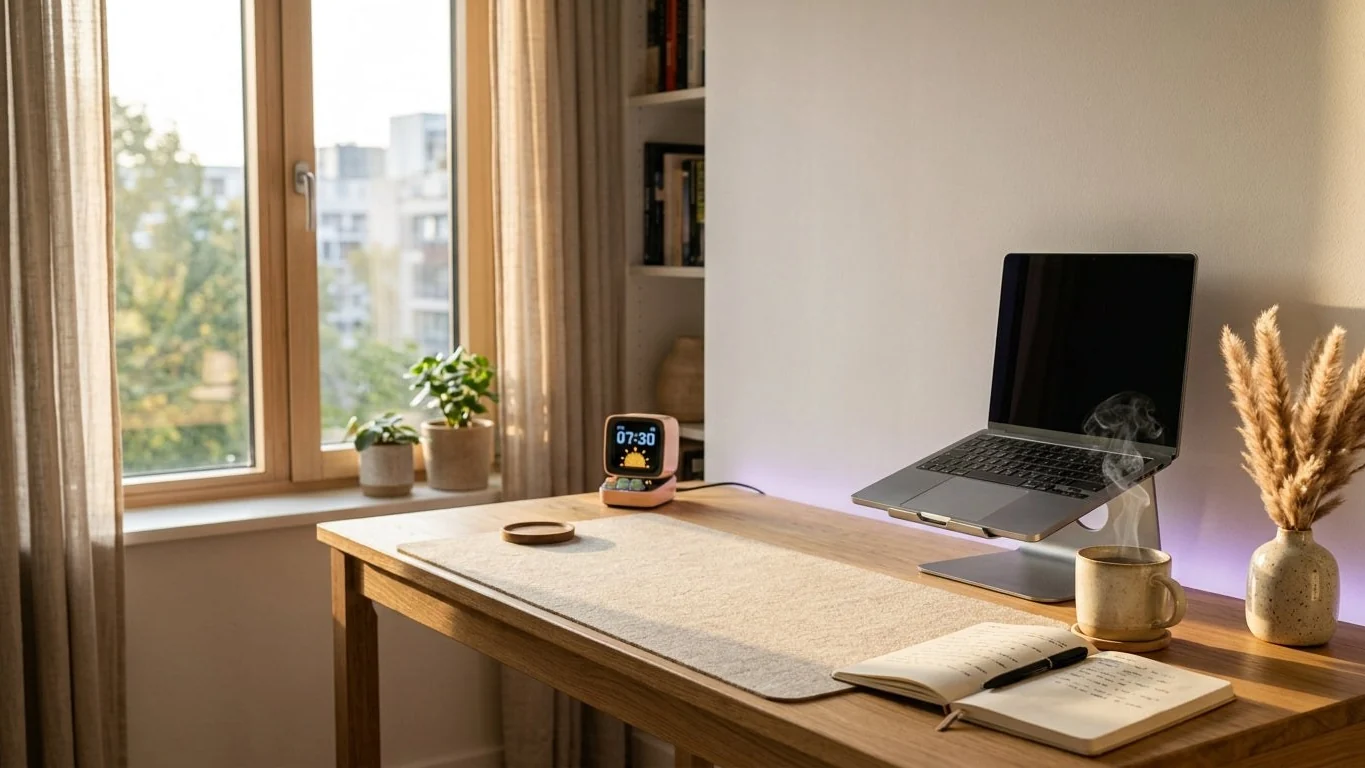
The homepage opens on a finished desk under warm lighting with hotspots sitting on the objects in it. Tap the mat and you get the mat. This inverts the usual relationship: instead of a banner that advertises the store and a grid that sells the products, the picture of the outcome is the navigation. Nobody buys a desk mat because of its dimensions. They buy it because they saw a desk they wanted to sit at.
02
Built rather than themed.
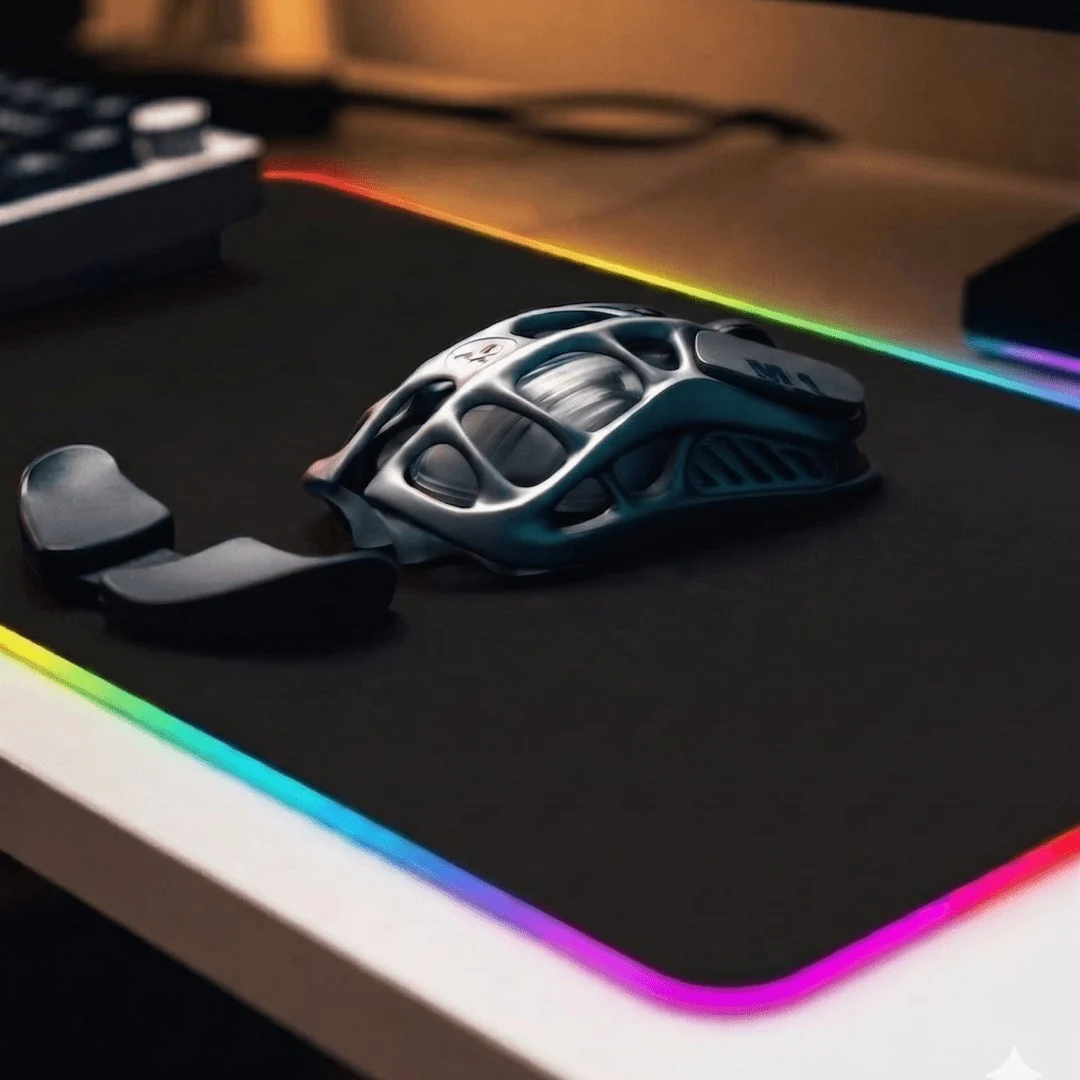
The storefront is a custom build, not a stock theme recoloured. That is what makes the hotspot hero possible at all, and it shows in the smaller decisions too: the floating pill navigation, the gradient hero, the way the page moves from atmosphere into product without a seam.
03
A product taxonomy that was set up properly on day one.
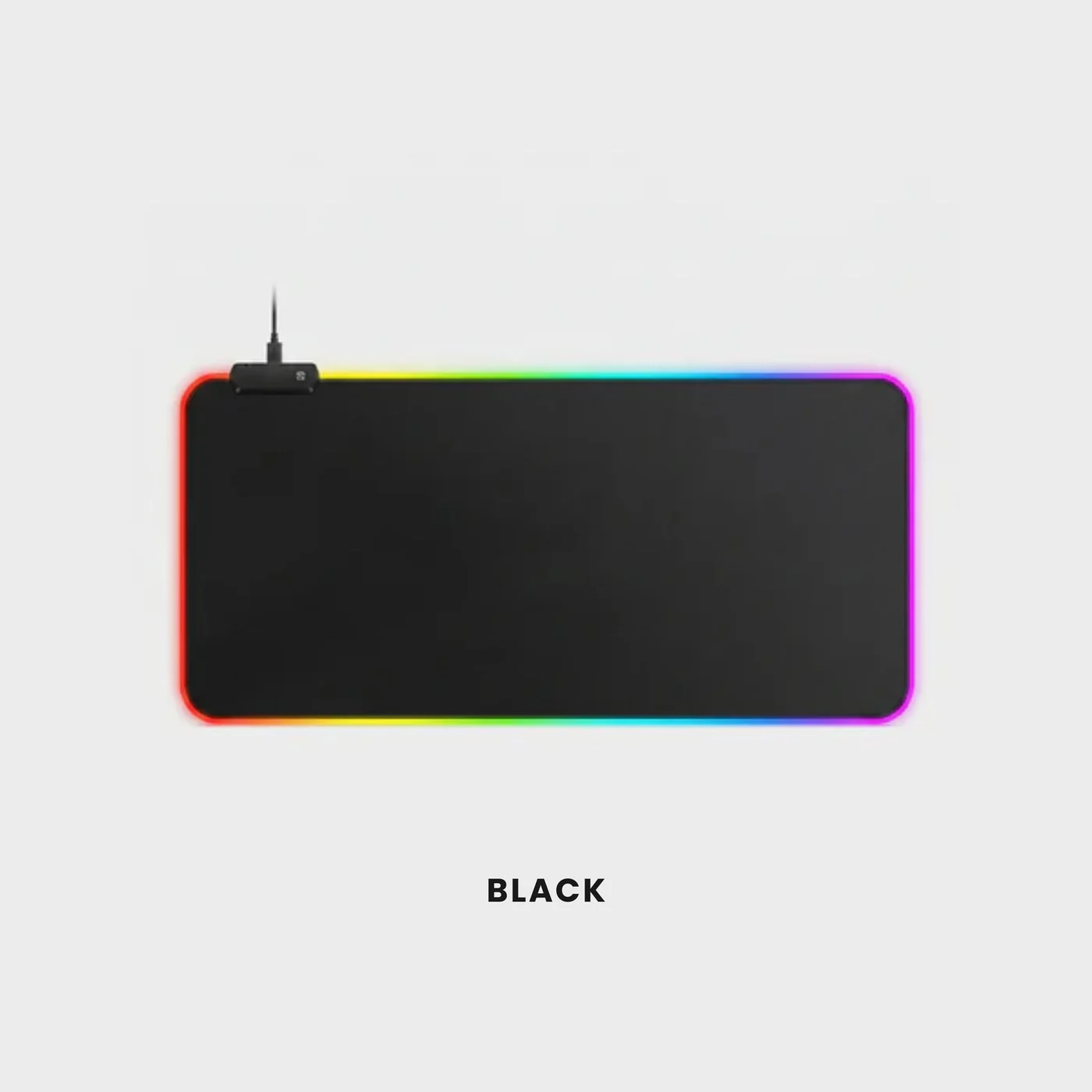
Every product on this store carries a real product type: desk mat, lighting, stand, cable management, cleaning, decor, tools. It sounds like housekeeping and it is the foundation everything else stands on. Filtering, search, collection automation and every future integration read from that field, and retrofitting it across a grown catalogue is far harder than setting it correctly at the start.
04
Small catalogue, deliberately.
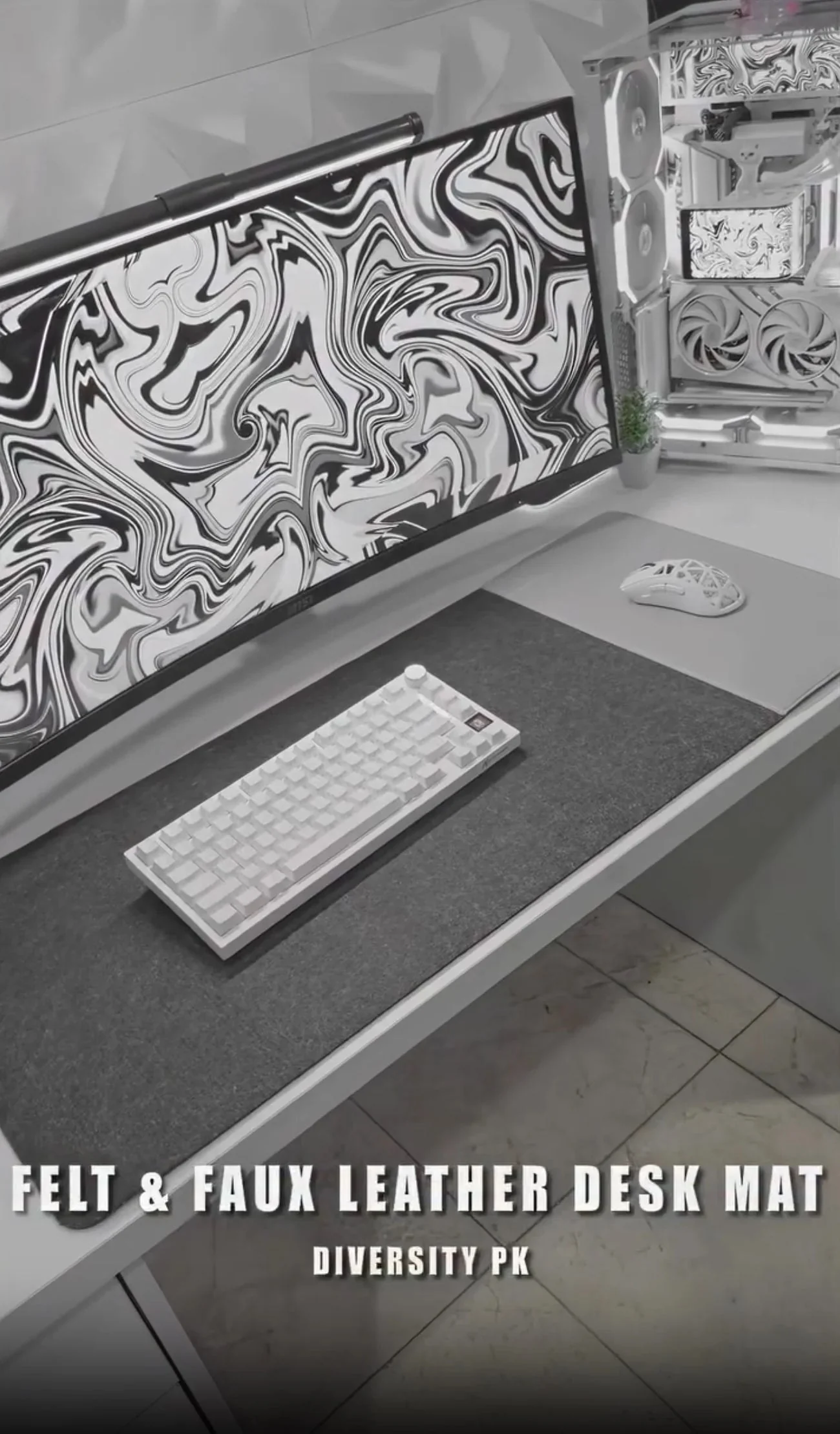
Fifteen products is a choice, not a stage. The proposition is a curated setup, and a curated setup with four hundred options is a marketplace pretending to have taste. Fast US shipping and fifteen-day returns handle the rest of the hesitation.
Read the full write-up
Building a store where the picture is the navigation
Sassy Setup sells desk accessories to a US audience: mats, ambient lighting, monitor stands, cable management and the small precision tools that go alongside them. It is a custom Shopify build rather than a configured theme, and the reason it needed to be is the homepage.
The problem with selling desk gear from a product grid
Almost nobody buys a desk mat on its specifications. They see a desk they want to sit at, notice it is nicer than theirs, and work backwards to the parts. The purchase is aspirational and visual, and it is triggered by an assembled scene rather than by an isolated object on a white background.
A conventional Shopify storefront is badly shaped for this. It shows a promotional banner and then a grid of individual products, which asks the visitor to reassemble the scene in their head from parts. That is work, and it happens at exactly the moment the visitor is least invested.
The shoppable hero
The homepage opens on a photograph of a complete desk setup, warmly lit, with interactive hotspots positioned on the objects in it. Tapping the mat opens the mat. Tapping the lamp opens the lamp. The instruction sits underneath in plain words: tap a dot to shop each piece.
This makes the aspirational image and the navigation the same object. The visitor does not translate between wanting the look and finding the products, because the look is the menu. For a category bought on appearance, it removes the single largest piece of friction in the funnel.
It also has to work on a phone, which is where hotspot heroes usually fall apart. Targets sized for a mouse are unusable with a thumb, and a scene that is legible on a desktop monitor becomes texture at 390 pixels wide. Both are build problems rather than design problems, and they are a large part of why this could not be a stock theme.
Getting the taxonomy right before the catalogue grows
Every product on this store carries a real product type: desk mat, lighting, stand, cable management, cleaning, decor, tools. This is the least visible decision on the whole build and one of the most consequential.
Product type is the field that filtering, search, automated collections, feed integrations and most third-party apps read from. A store that leaves it empty, which an enormous number of Shopify stores do, works fine at fifteen products and becomes progressively harder to manage at every size above that. Retrofitting a taxonomy across a grown catalogue means touching every product and rebuilding every automated collection.
Setting it correctly at fifteen products costs almost nothing. It is the clearest example on this build of work that pays off entirely in the future.
A small catalogue on purpose
Fifteen products is a positioning decision rather than a starting point. The proposition is a curated setup: these are the pieces worth owning. A curated setup with four hundred options is not curated, it is a marketplace with a nicer homepage, and the customer can tell.
The trade-off is that a small catalogue has to convert harder, because there are fewer chances to find something a visitor wants. Fast US shipping with a stated four to seven day window and fifteen-day returns are there to take the remaining hesitation out of a first order from a brand nobody has heard of yet.
What applies to other visual product categories
- If the product is bought by look, sell the look and make it clickable. A grid asks the customer to do the assembly.
- Interactive heroes are a mobile problem first. Design the thumb target before the desktop composition.
- Set the product taxonomy on day one. It is nearly free at launch and expensive at every size after.
- A small catalogue is a claim about taste. It only holds if you do not quietly grow out of it.
If you are launching a store in a visual category and want the storefront to do the selling, book a 30-minute call.
Services in this work
More case studies
Tell us about your store.
A 30-minute call about the store and what is taking your time, and a written quote after.
“For the first time I am confident my Shopify store is in the right hands.”
Rex M., United States · Fiverr, repeat client