- The work
- Brand Identity & Shopify Build
- The store
- driftwoodatelier.com
- Built with
- Shopify
- Custom Theme Build
- Klaviyo Email & SMS
- Multi-Currency (GBP / EUR / PKR)
- TikTok-Driven UGC Module
The brief
What Driftwood Atelier needed.
Driftwood Atelier is an underground streetwear brand built for the TikTok-led buyer. The founder wanted a brand identity that felt moody, owned, and uncopyable, plus a storefront that converted scroll traffic without looking like everything else in the category. We built the brand from logo through to the live store, and continue to ship weekly product drops and content updates.
01
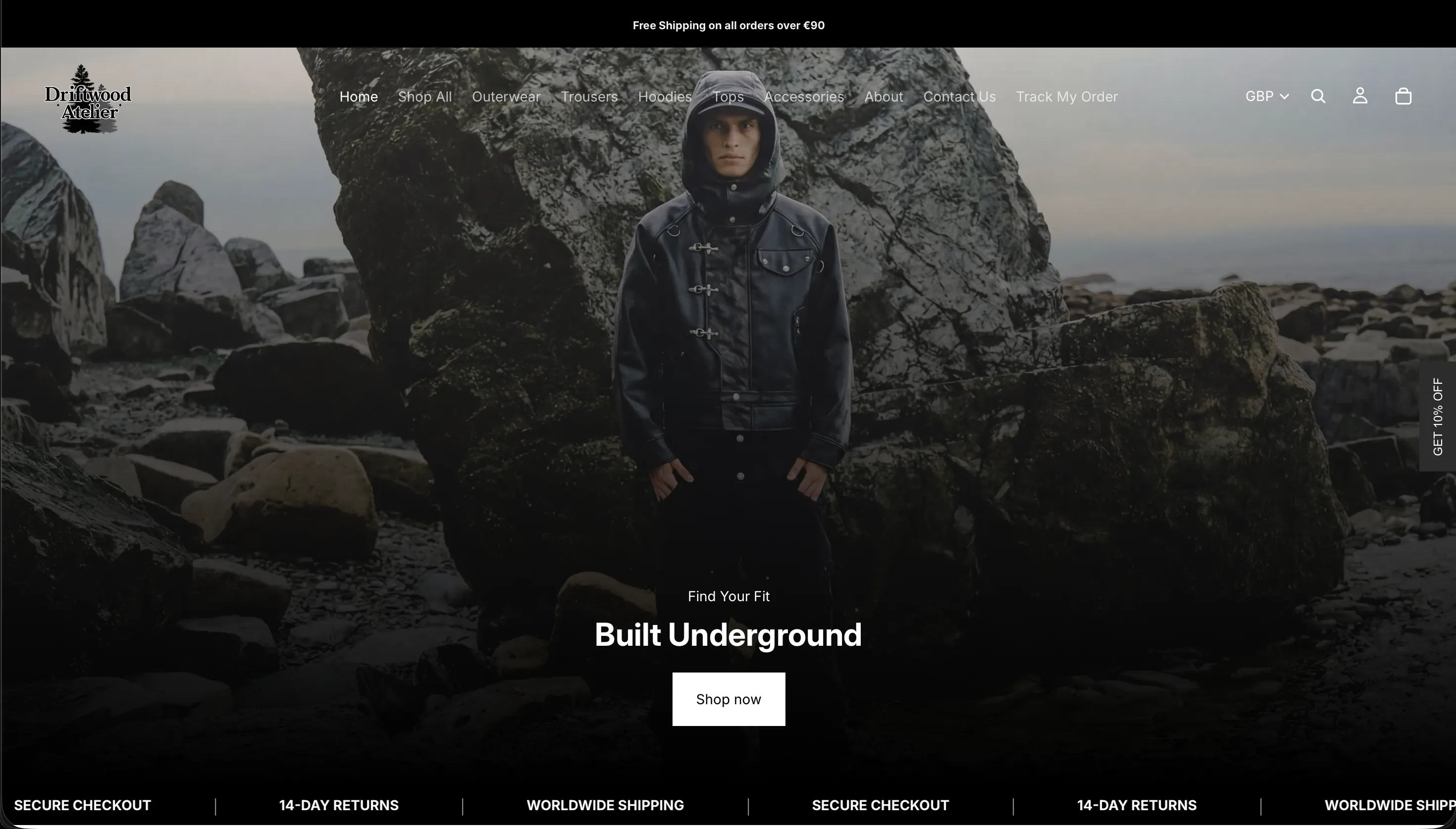
Built Underground.
The homepage hero is a single full-bleed cinematic frame: model, environment, attitude. No banner, no offer, no clutter. The brand promise lands in two words and the buyer keeps scrolling because they want to see what else this place is hiding. The store is run to written rules and procedures, from the product drops to the returns.
02
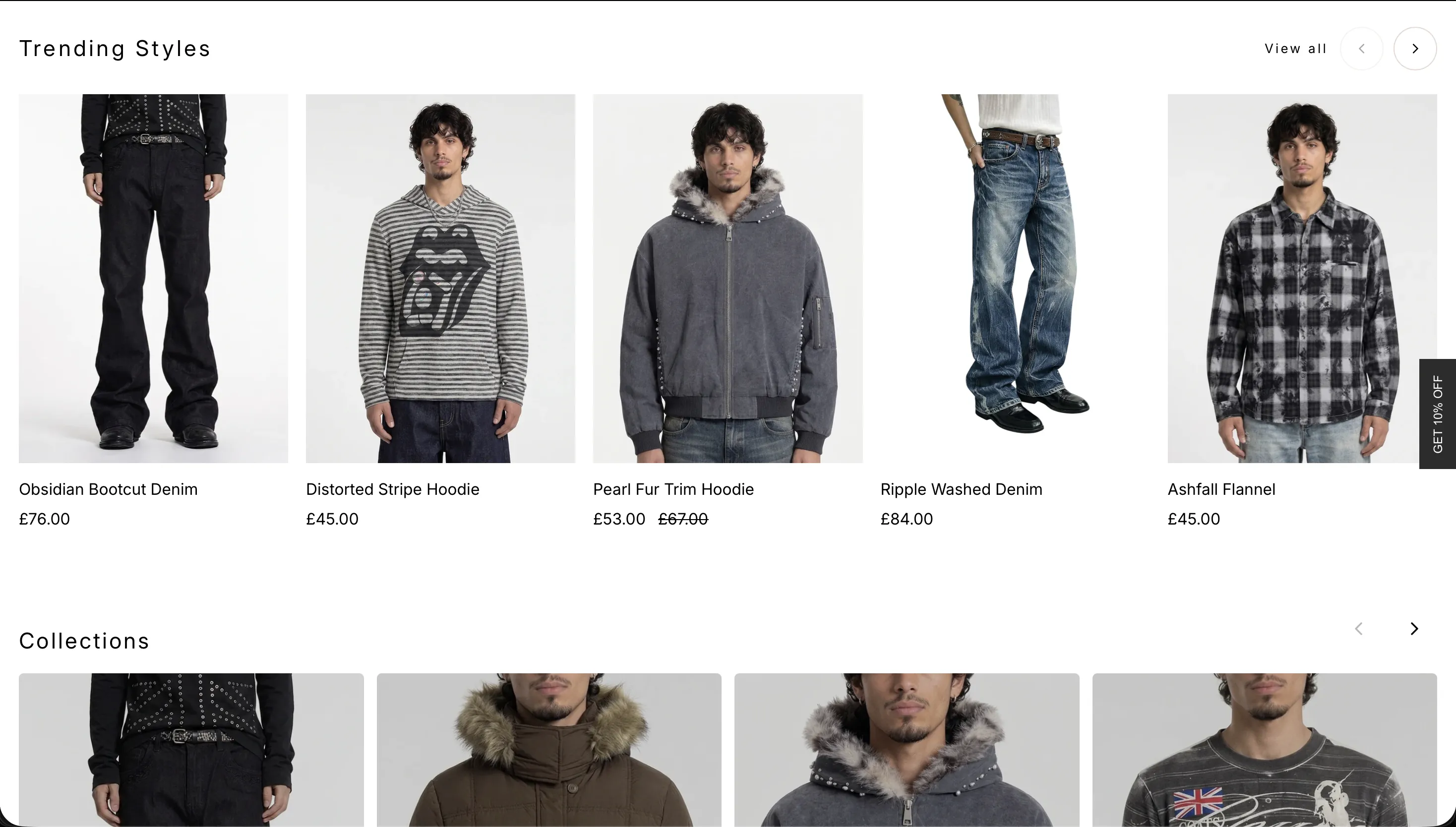
Trending styles, presented like a runway.
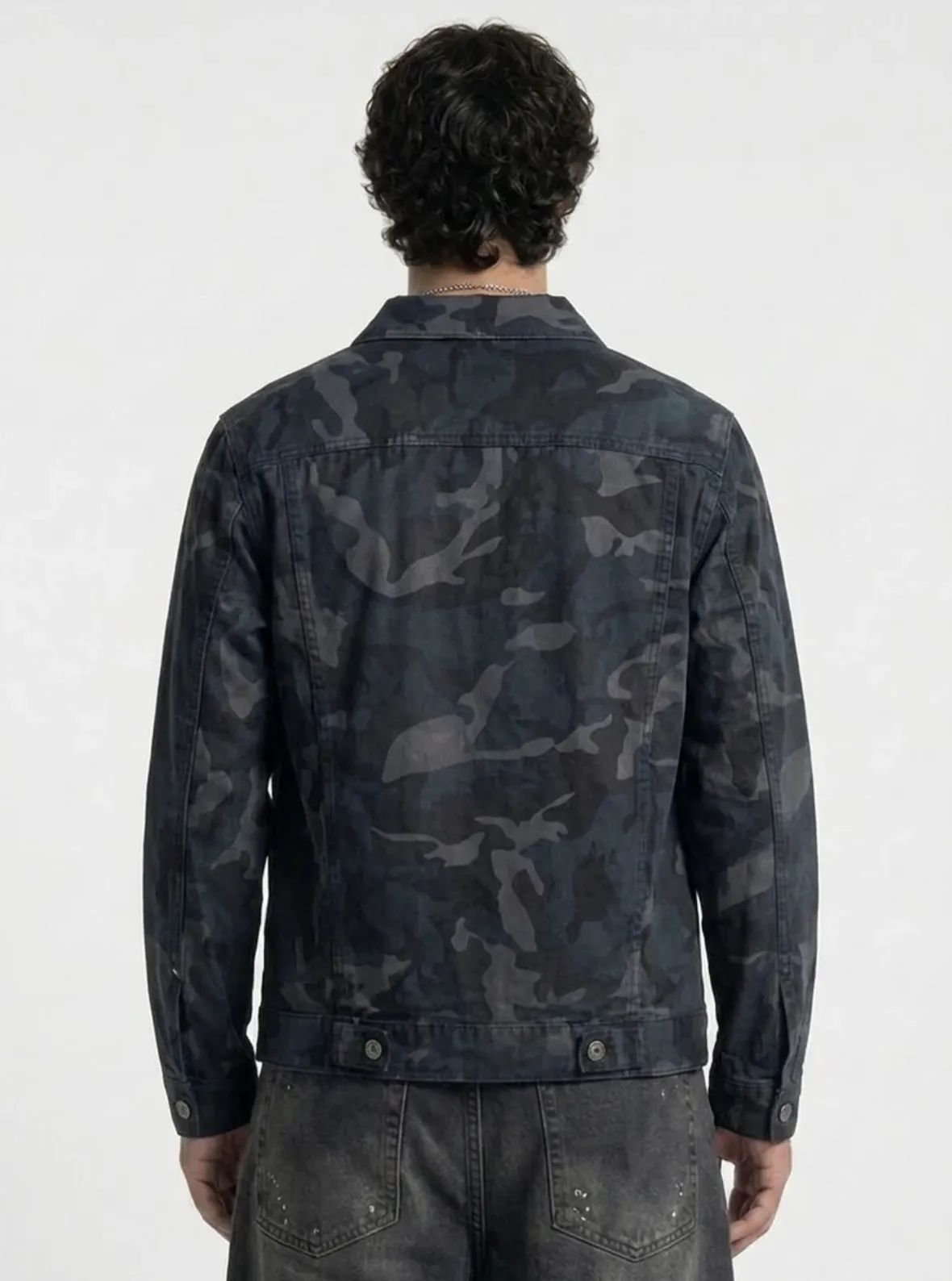
Product cards lean into editorial composition rather than studio cutout. Each piece is shown on a model in a real environment, with hover states revealing detail shots. This is a deliberate choice to make the catalog feel curated rather than infinite.
03
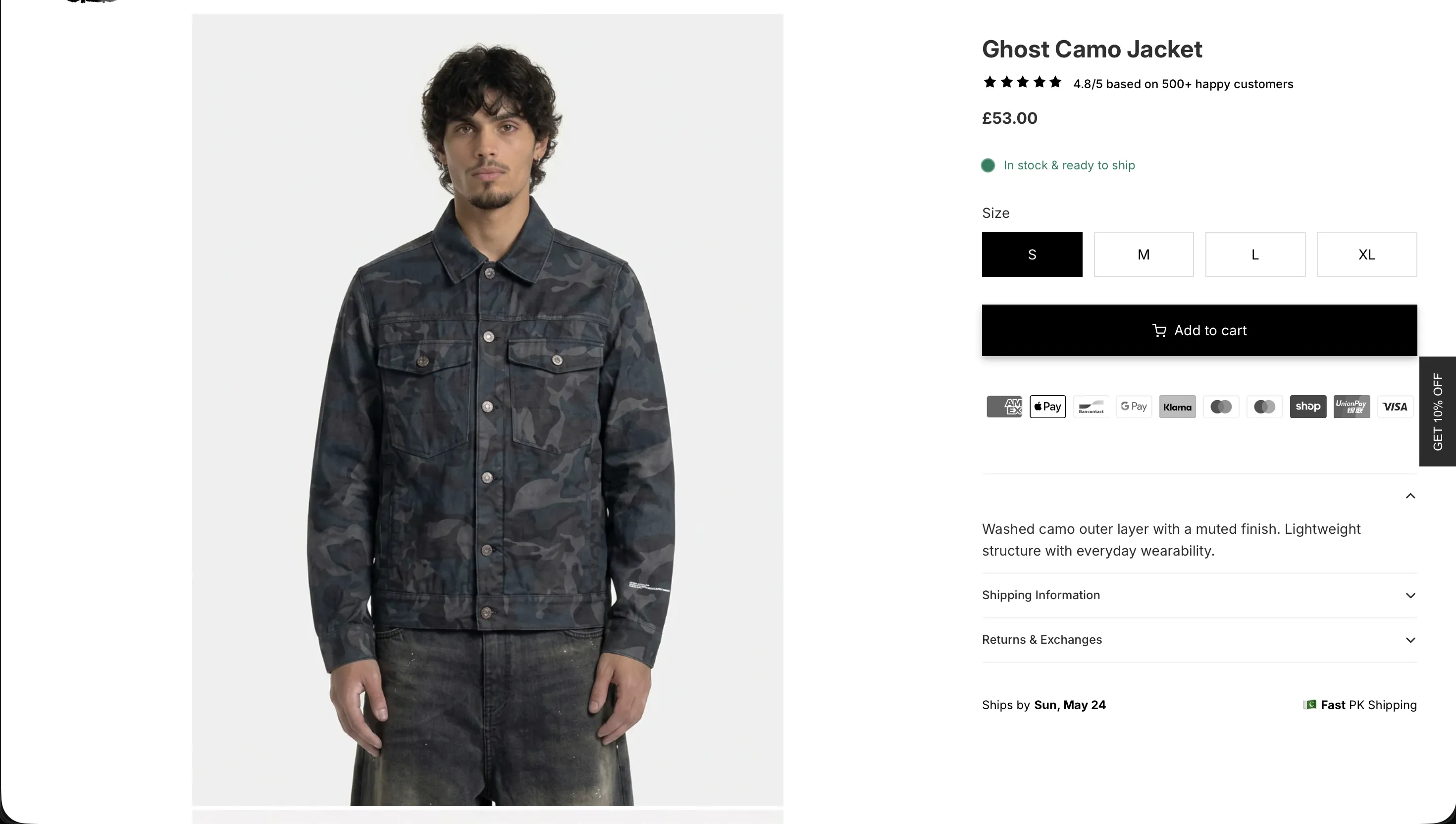
Product pages built for converters.
The product page format combines social proof from real customers, an in-stock indicator, a size chart calibrated for streetwear cuts, and an add-to-cart that follows the buyer as they scroll.
04
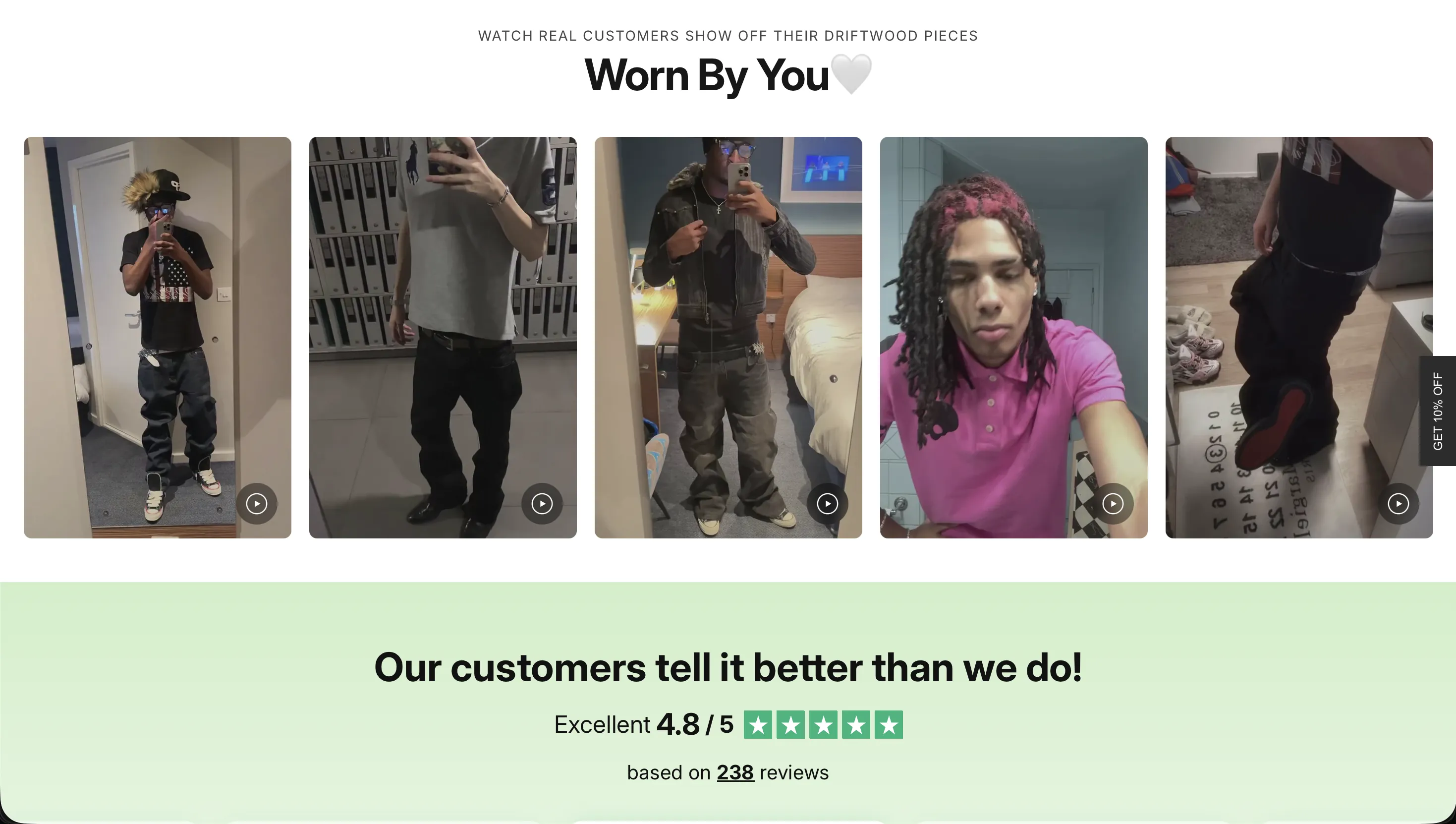
Worn by you.
A UGC gallery built into the homepage and product pages surfaces real customers wearing the pieces. Customer-tagged content earns a place on the storefront, which both fuels content marketing and signals to new buyers that Driftwood is a brand with a community, not just a checkout page.
Read the full write-up
Building a streetwear brand for the TikTok-led buyer
Driftwood Atelier came to us with a product, an attitude, and almost nothing else. No finalized brand identity, no storefront, no email infrastructure. The founder had a clear sense of how the brand should feel (moody, owned, deliberately resistant to looking like a templated storefront) but needed a partner to take it from concept to a live, conversion-ready ecommerce business. We built it from the logo up and continue to run the storefront on a retainer basis.
The brand identity
Streetwear is one of the most crowded direct-to-consumer categories in 2026. Generic black-and-white minimalism is over-saturated. Loud color and graphic-heavy branding feels dated. The brand identity we built for Driftwood threads between those poles: dark, textural, photography-led rather than graphics-led, with a typographic system that signals confidence without trying to be edgy for its own sake. The logo is intentionally simple so it survives every context the brand will eventually appear in (tags, embroidery, hangtags, packaging, social profiles).
The visual identity does deliberate work to differentiate Driftwood from the long tail of TikTok-marketed streetwear brands that all look broadly similar. Photography is shot in real environments rather than studio backdrops. Models are styled in full looks rather than isolated pieces. The brand reads as something that lives in the world rather than something that was assembled in a Shopify theme editor.
The storefront build
The custom Shopify build prioritizes three things: speed, editorial weight, and a buyer journey that does not let conviction drop between landing and checkout.
Speed as a brand feature
The TikTok-driven buyer expects mobile pages to load instantly. The custom theme is built with aggressive image lazy loading, minimal third-party scripts, and a deliberate decision to avoid the popup and chat-widget app stack that most Shopify stores accumulate.
Editorial composition over ecommerce density
Product cards lead with full-look photography rather than studio cutouts. Hover states reveal detail shots. Category pages feel curated rather than infinite. The decision is deliberate: streetwear buyers want to see how a piece looks in context, not how it looks on a white background.
Product pages built for converters
The product page format combines social proof from real customers, an in-stock indicator for limited drops, a size chart calibrated for streetwear cuts (which run differently from standard apparel sizing), and a sticky add-to-cart that follows the buyer as they scroll through details. The page is structured so the buyer's conviction never drops between hero and checkout.
The drop cadence
Driftwood operates on a drop model rather than a continuous catalog. New product releases happen on a planned cadence with email and SMS pre-announcement, social teasers, and limited inventory that drives urgency on launch day. Our team handles the operational side of each drop:
- Inventory holds and reorder triggers calibrated to drop volume
- Pre-launch email and SMS sends through Klaviyo
- Day-of launch monitoring for any operational anomalies
- Post-launch wave of UGC capture from early buyers
- Inventory rebalance and waiting-list activation for sold-out pieces
The drop model creates higher per-launch revenue concentration than a continuous catalog, which means the operational layer has to be tighter. Any operational failure on drop day is immediately visible to the audience. We have run multiple drops without operational incidents.
The community and UGC engine
Streetwear brands live and die on community. Driftwood customers regularly tag the brand on TikTok and Instagram wearing their pieces. We built a UGC capture and display system into the storefront that surfaces this content on the homepage and product pages, with each piece of UGC linkable to the matching product. Customer-tagged content earning a place on the storefront serves two purposes: it gives early buyers a tangible reason to share their look (the chance of being featured) and it signals to new buyers that Driftwood is a brand with real customers, not a marketing concept.
What we learned that applies to other streetwear brands
Three patterns from the Driftwood engagement that we have since applied to similar streetwear and drop-model brands:
- Editorial photography is the leverage point. Streetwear product photography that looks like other streetwear product photography produces commodity results. Investment in distinctive visual identity at the photography level pays back across every customer touch point.
- Drop operations are higher-stakes than continuous catalog operations. A single failed drop damages community trust in a way that a single failed week of continuous selling does not. Tightening the operational layer ahead of each drop is mandatory.
- UGC display has to be product-linked to matter. A pretty wall of customer photos is just decoration. A clickable wall where each piece of UGC leads to the matching product is a real conversion lever.
If you operate a streetwear or drop-model brand and want to discuss what a similar brand build plus operations engagement would look like, book a 30-minute call.
Services in this work
More case studies
Tell us about your store.
A 30-minute call about the store and what is taking your time, and a written quote after.
“For the first time I am confident my Shopify store is in the right hands.”
Rex M., United States · Fiverr, repeat client